


Australian fatherhood is undergoing a profound transformation. For generations, the typical dad was confined to gendered tropes eg “the breadwinner” of the family, and whilst some of these stereotypes still exist - cue outdated jokes about “daddy daycare”, the modern Australian dad is more engaged and present than ever before, marking a shift away from passive parenting, toward a dynamic shared experience.
The proof is in the proverbial google-key-search-pudding. Search terms such as “how to get baby to sleep through the night dad”, “best baby carriers for dads” and “mental load in parenting” are currently climbing the ranks, also marking a huge generational shift as dads actively seek resources to help navigate their roles.
Recent research from men's health charity Movember shows that they’re not just google searching. In 2026, their study showed that 72% of Australian dads 1 are much more hands-on and involved in the day-to-day care of their children, than their own fathers were, highlighting a conscious effort by the current generation to break away from the more distant parenting styles of the past.
The shift is mirrored in the workforce, as Australia has structurally shifted to a two-working-parent society, with 73% of parents both employed as of June 20252. Australia’s Paid Parental Leave scheme has also expanded with more dads opting in than ever before, with the number of dads accessing parental leave tripling in five years. So, while women still take the majority of parental leave, the trajectory is clear: caring for a newborn is no longer viewed exclusively as "mum’s job."
Naturally, and importantly, we prioritise the well-being of new mothers, addressing the isolation they face and the critical need for community. Yet a new conversation is emerging and viral movements like ‘Beers and Braids highlight a growing trend and raise the questions: is there a significant gap in the dad community? Are fathers seeking deeper social connections, and what systemic or social barriers prevent them from finding them?
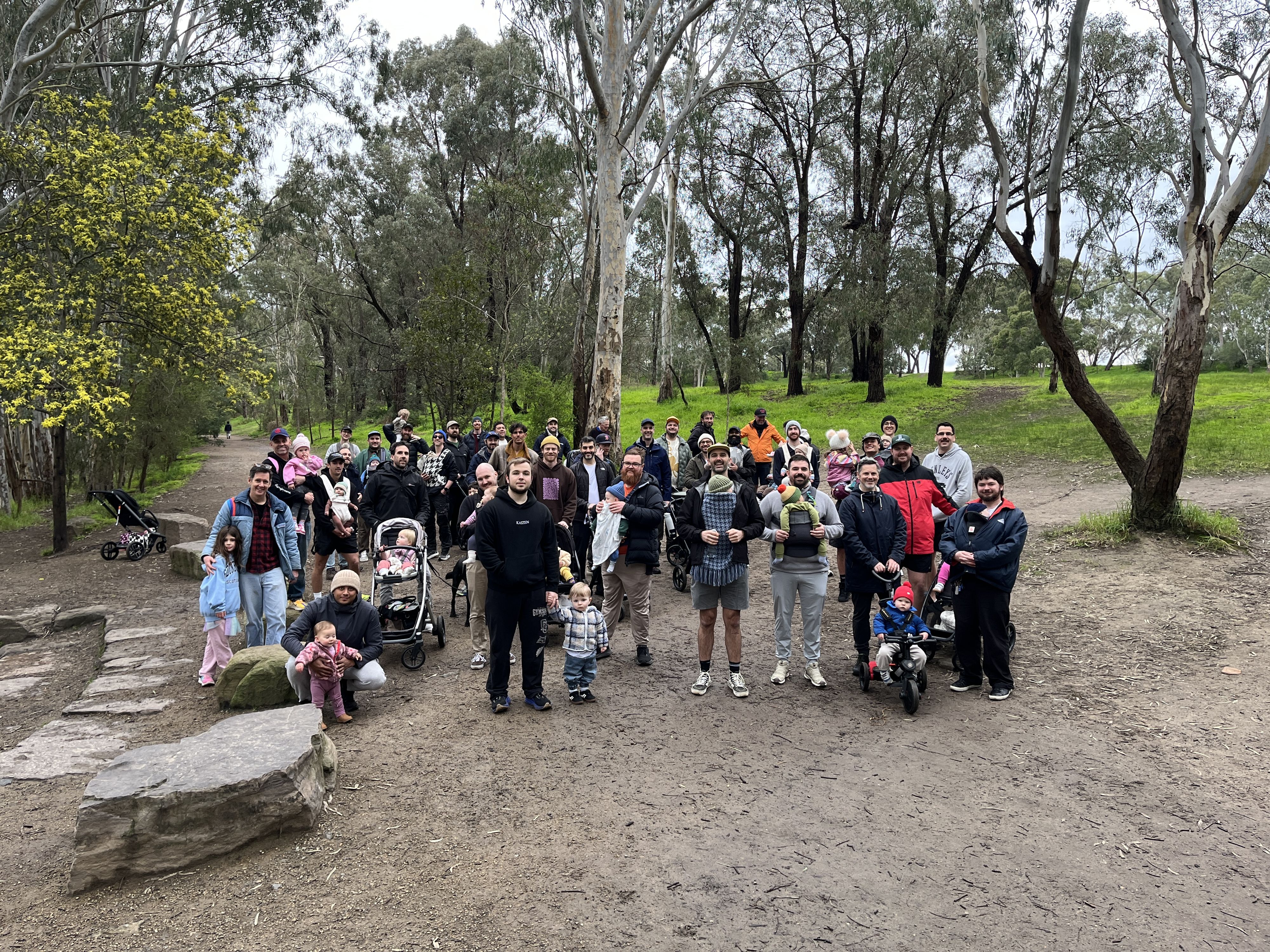
A perfect example of this need is Melbourne writer, content creator and new dad, Zachary Perez, who recently went viral after sharing a vulnerable moment online when no one turned up to his newly formed dad-walking group. His post sparked an outpouring of support, generating over 2.1 million views. The following week, over 50 dads turned up for the walk group, showing that there is a high demand for connection between new dads navigating early parenthood. This highlights a simple truth: while modern dads are stepping up for their families, they’re still craving a sense of community and the chance to connect with other dads.
So, the origin of the walking groups actually dates back to October/November of last year when our baby was 5 weeks old. I went along to the parents group because I was fortunate to not be working at the time. The first week there were 3 dads out of the 9 families, the following week there were just 2, from then on it was just me. I got to make some great connections with all the mums there, but I was really wanting to spend some time with dads too and I was hoping parents group might give me that, but I found, due to the timing, it just wasn’t conducive to the dads being able to get there, as many were already taking time out of work to be there. So I just thought, let's see if I can find some people, whether it's these dads or dads from any other walk of life at whatever stage they are along their parenting journey, who want to go for a wander in the area. And funnily enough, I started that up with one guy back in October.
The first week we did it, despite quite a big social media following between the two of us, no one came. It was he and I. But then the next week there were three people. Then there were five. Then I think we capped out at seven or eight a few weeks later, which was great. It was just such a great opportunity to bond, talk, share with people you hadn't even met before but you instantly had a connection because you all had kids
I've thought about this and wondered whether I would have gotten there myself were I not the one organising. Would I be the type of person who could turn up to something alone and fumble my way through some introductions? Personality wise, it’s not something I've done previously, but I guess having a kid has made me a little bit more outgoing; but I think there's a lot of reasons you might not get out the door to go to a walk as a parent. So that’s probably the first one. The second one, is probably a visibility factor. You need to know that it exists to even have the opportunity to get there. And to have the opportunity to get there, you probably do need a misfire.You know, you say “I'm going to go tomorrow” but then something happens at home with the baby, so you don’t quite get there and then hopefully, the next week you actually can, so I think that’s one of the factors.
And, this is hard, and I think we’ll get there, but it would be awesome if there were changes made to the workplaces, whether there are changes to leave afforded to dads/paternity leave, to let dads get to the parents groups. That would actually mean you’re not reliant on having to get out of your comfort zone so far to try and create some of those connections, just so that they're pencilled in and you're not reliant on having to drive down and meet a group of strangers.
I think this backs up what I was saying before about it being a visibility problem. There are resources out there for dads, but they're not structured the same way that a lot of the maternal and child health nurse appointments are; with the different things that are really, really fantastic for a mother and baby, you have to go looking for them to find them as a dad. And that in and of itself is probably not always men's strong suit. Firstly, sticking their hand up and saying "I think I need something like this", and then going to the next step of "where do I find it?" and then finally getting there, which is maybe the third and the biggest step of all. So it definitely reinforced the suspicion I had that people needed it. I knew I needed it.
And then I knew from the group we'd had in October/November of last year how much we'd all gotten out of it. And yes, it was only five to seven of us, but it did tell me that this was something people would do if they knew it was possible. And then obviously lots of people caught wind of it and came on down—it was one of the worst days weatherwise. The forecast was telling us it was going to rain. It held off thankfully, but I think we could have had twice as many there, comfortably, had it been forecast for nicer weather.
Then the next week we went again and there was another great turnout and the weather was much more reliable, but that was probably the best signal that after all the hype had died down, so many people came back, and so many people who wanted to be there the first time but couldn't for whatever reason, scheduling or clashes, turned up. So yeah, it kind of proved that there's something in it beyond just a quick internet sensation.
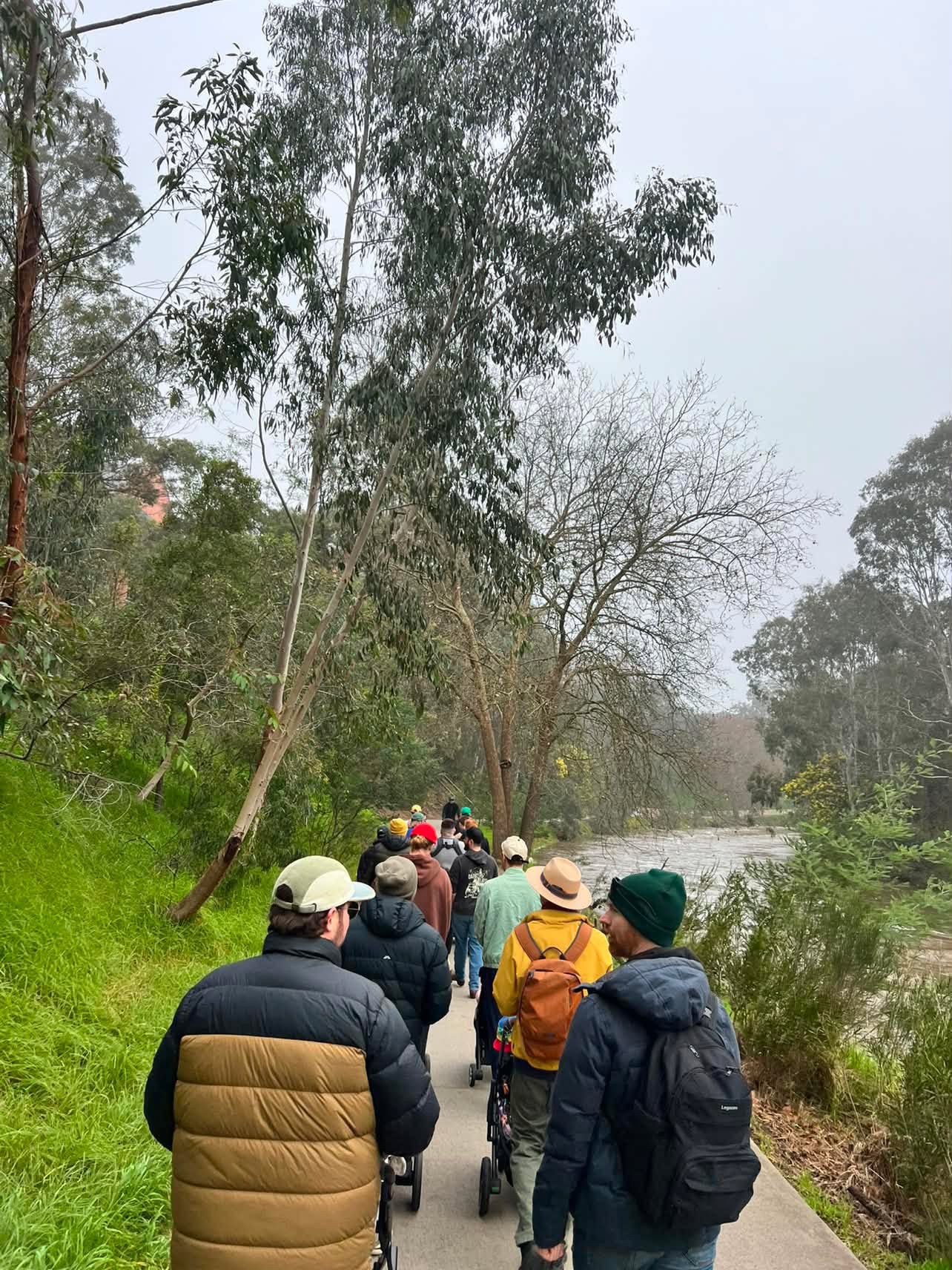
I do a lot of walking. We’ve spent so much time with the baby in the carrier - sometimes down by the river, but mostly just walking the neighborhood. I’m seeing the world through different eyes, and people are looking at me differently. People in the community step aside, or they’ll say, 'You go first.' I notice a motorbike slowing down to avoid revving, or someone on a skateboard swinging wide to go around us. Those things really matter. When the guy with the leaf blower turns it off because he sees us coming - that can be the difference between your baby staying asleep and they’re really valuable. You almost have to be a parent to understand how much. I’ve really tuned into those little moments of connection; I’m much more conscious of them now, and it’s been a good thing, because I feel far more connected to the community than I did before.
I definitely do. I wrote about this in my book because I certainly went through periods of quite a rollercoaster of emotions; It was the greatest experience of my life, yet I felt overwhelmed, claustrophobic, and lonely—missing my old life while simultaneously, unable to imagine anything other than the life I have now. And, during that time, I was so thrilled by the maternal and child health nurse appointments - Someone turned up here on day three, then on day five and then day 10. And then we had our first visit to see them after 2 weeks, and then at 4 weeks.
I certainly wasn't the focus, nor should I be, but I just thought there was room for a 15-minute scheduled appointment amongst all these awesome government services for dads around day 13 or 14 in case he's going back to work the next day to just say, “how you doing? This is your scheduled phone call. It'll take 15 minutes”.
Nine out of 10 dads might say, “I don't need this phone call, thank you very much." One out of ten might say, "I didn't think I needed it, but I did.". But I just think there's room, just to have a quick conversation with a dad who might have made it four weeks without anyone saying, "How are you coping with this change? Incidentally, a lot's happened to you in the last four weeks”. and ultimately, for the one who does need it, that call could be a lifeline.
There's a lot going on in that period, so rather than the dad needing to be proactive, seek out a number, and find the time to dial, just give him the option to pick up the phone. Because, if you're at that stage, you're probably starting to get to one of the more extreme levels of wanting or needing help too. I know personally you just don't feel comfortable bringing anything up about how this might have affected you, because you know that in terms of how it's affected your partner it's on a completely different scale. It’s an extra resource that could lead to someone saying, 'Now that you mention it, I have been experiencing that,' or realising that what they're feeling is totally normal. I think that’s something everyone would agree is a helpful step forward.
Definitely. Most of my friends started having kids around 13 years ago, and had stopped by the time I started, and parenting has changed a lot even over that period. In terms of looking back at my own childhood and what it was like then, it was an old-fashioned gender role situation. Dad working was considered the best utility he could have, which I'm sure he was amongst the vast majority. He stayed in his lane, was good for a sport pickup or a drop off, but I don't really remember him picking me up from school unless mum was unwell or away or something, and he wasn't really doing a lot of kids' lunches or those sorts of things. I recall my mum telling me my dad went to work the day after my brother was born, and he admits, not proudly, to never changing a nappy. But times change and I already know that whether I'd had that time off at the start or not, I'd have been wanting to be far more involved, but also, it would have been expected, which I think is completely fair and reasonable, too.
Even in terms of parents groups, none of my friends made it to any, because as you said, up until more recently it was still called mother's group. And now that's something I am grateful that I got to go to, and would urge everyone to go to if they can. As far as a dad's walk, it would have been unfathomable for my father to be out doing something like that with us. So, definitely a massive shift, but not just from 40 years ago to today, but even back 10 years ago.
I'm definitely a beneficiary of this new way. It's hard to quantify, but my connection and bond to my child is so strong, and I just know, sadly that I don't think it could be as strong as it, or it would take longer to get to where he and I are, had I been back at work after two weeks and I was gone for 9 hours Monday - Friday.
There were lots of revelations. I thought I had asked all the right questions and felt as prepared as I could be, but initially, I was surprised I wasn't as much of a natural as I expected. Growing up, I had a lot of younger cousins, so there were always babies around and I was quite good with kids—but it’s very different when it comes to your own baby. I was surprised by how frustrated I’d get, often just from sleep deprivation; you think the baby’s down for a stretch, then ten minutes later they’re awake. I assumed I’d naturally be completely zen, but that wasn't the reality.
The second revelation that really hit home is how task-oriented and rigid I was with time management. If I started something, I always needed to lock in and finish it. Now, I never finish anything I start. I’m constantly sitting down thinking, "Okay, now's my chance to get this thing done," and you're just forever stopping because your baby needs you, or wakes up, or you thought you had an hour and 20 because that's what he normally naps for, but he's up after 25 minutes. And I'm like, "I haven't even boiled the kettle."
I thought I’d be like, "Okay, this is the new normal. You can forget about ever finishing whatever you're starting and you'll forever be halfway through things, the house is constantly going to be in a state of chores half done," and it's taken me longer than I thought to be able to just let go. It’s these realities—rather than being surprised by the number of nappies or how bad the sleep situation is—that have stuck with me the most. But I don't remember anyone specifically saying to me, "It's just that you're constantly going to be doing your head in over the fact you'll never finish anything ever again." These are the things that have stuck with me the most, probably because they’re still relevant.
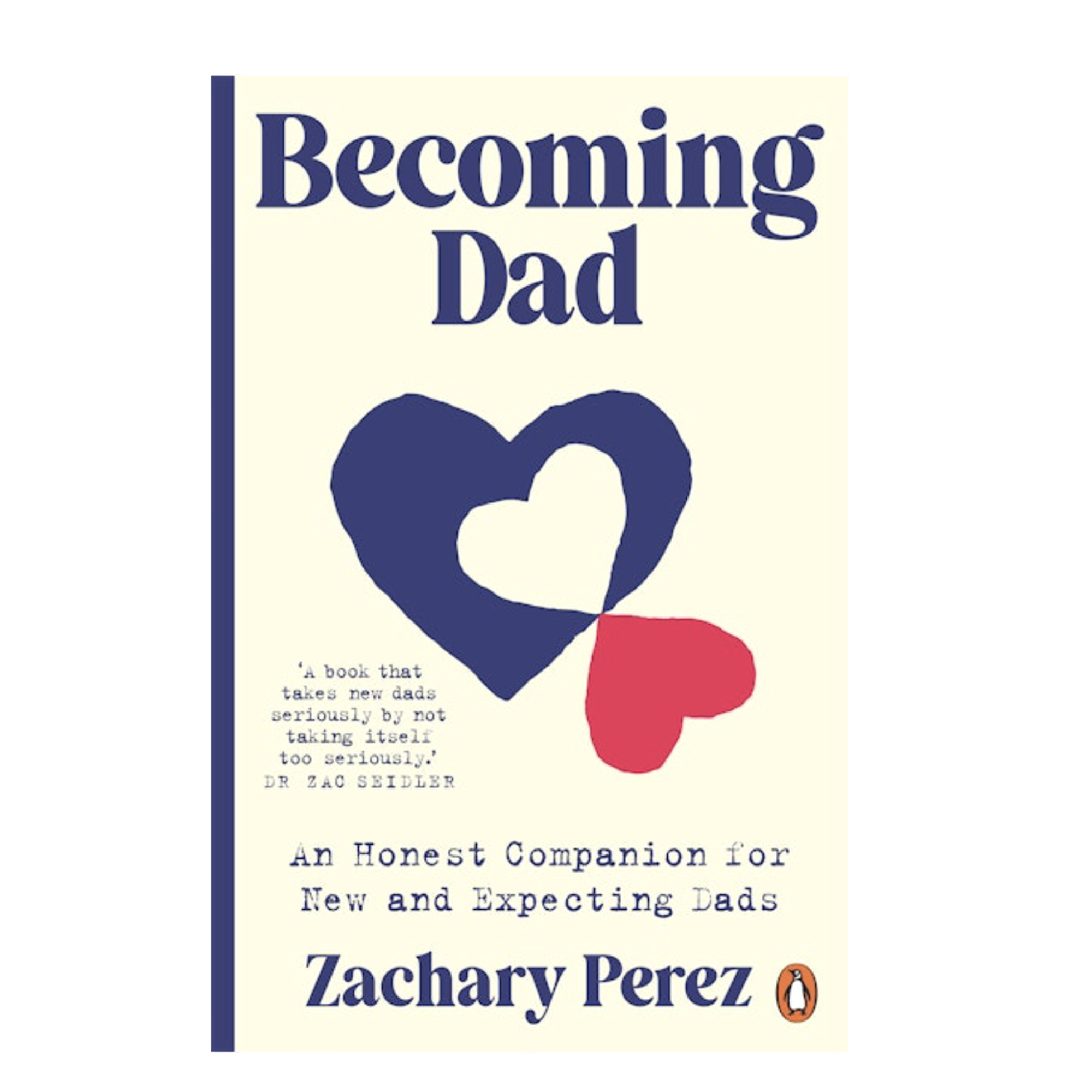
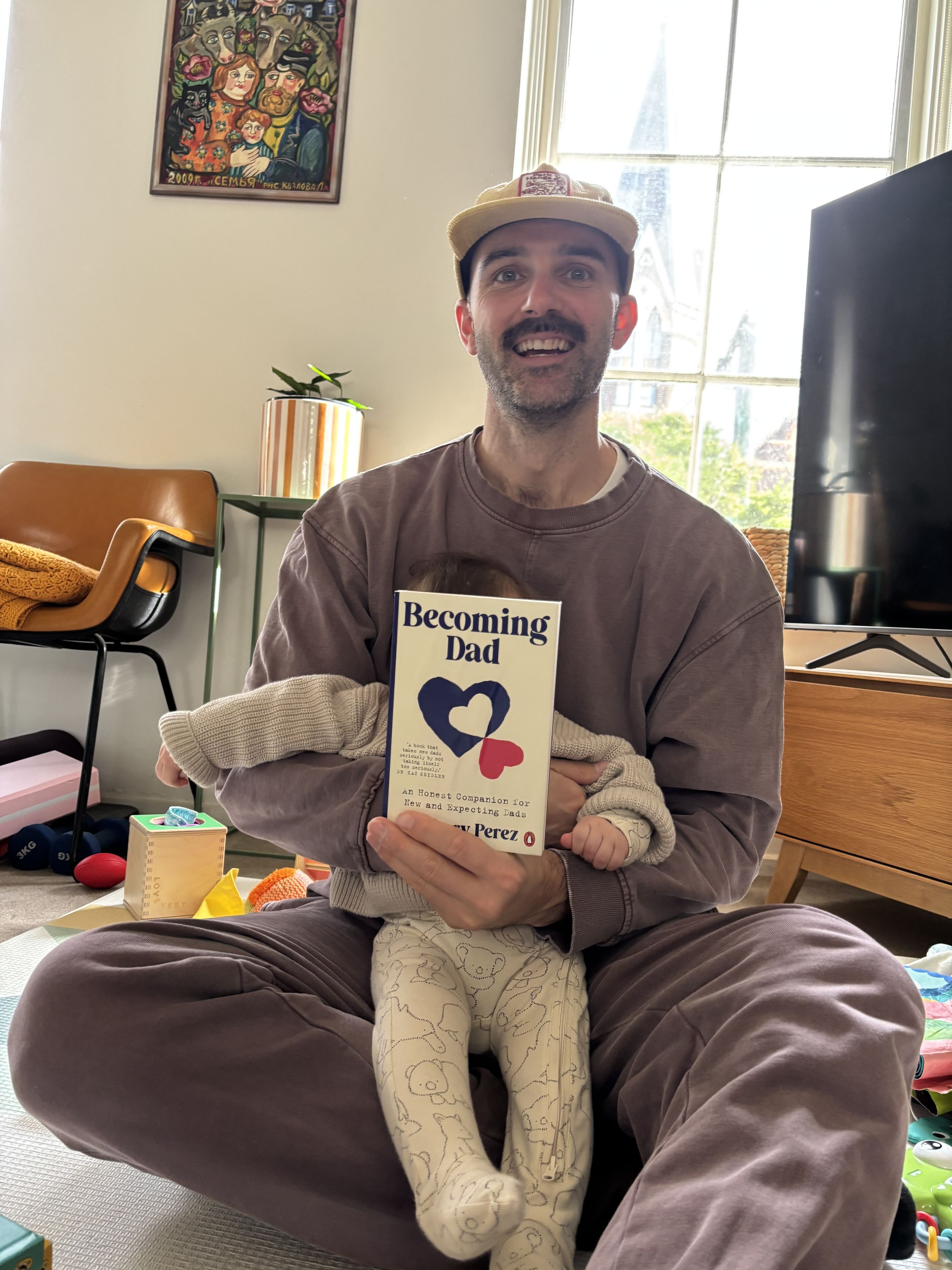
Zachary Perez's debut book, Becoming Dad, offers an honest, personal look at the realities of his first 50 days as a new father and is available for purchase now. With Father’s Day approaching, grab yourself or the new dad in your life a copy
References
[1] https://movember.com/uploads/files/2026/Movember%20-%20Fatherhood%20Report.pdf
[2] https://www.abs.gov.au/statistics/labour/employment-and-unemployment/labour-force-status-families/latest-release
[3] https://www.servicesaustralia.gov.au/paid-parental-leave-scheme-changes